

Difference Between Pinocytosis And Phagocytosis
Phagocytosis vs Pinocytosis: Definition and Function

Phagocytosis and pinocytosis are biological processes wherein a jail cell senses and engulfs nearby material. These processes enable cells to intake substances that can't hands pass through the cell membrane. All the same, phagocytosis and pinocytosis are forms of endocytosis that differ in several ways including how they intake material and the blazon of textile they engulf. In this guide, nosotros explore the basics and cardinal differences between phagocytosis vs pinocytosis in more than particular.
What is phagocytosis?
Phagocytosis is a specialized process by which cells engulf relatively large, solid material. These particles, generally larger than 0.five μm in diameter, may include apoptotic cells or foreign substances. Unicellular organisms such as amoebas use phagocytosis to larn nutrition while jail cell types of multicellular organisms apply this universal process for preventative functions such as tissue homeostasis. Amid these cells, certain types are capable of greater efficiency in the phagocytic procedure, such as monocytes or macriophages. Other, similar epithelial cells, are capable of phagocytosis, but at a less efficient rate.
Phagocytosis part
The cellular processes of phagocytosis consist of four distinct phases that include 1) the detection of target material, 2) activation of phagocytosis, iii) the formation and 4) maturation of the phagosome.
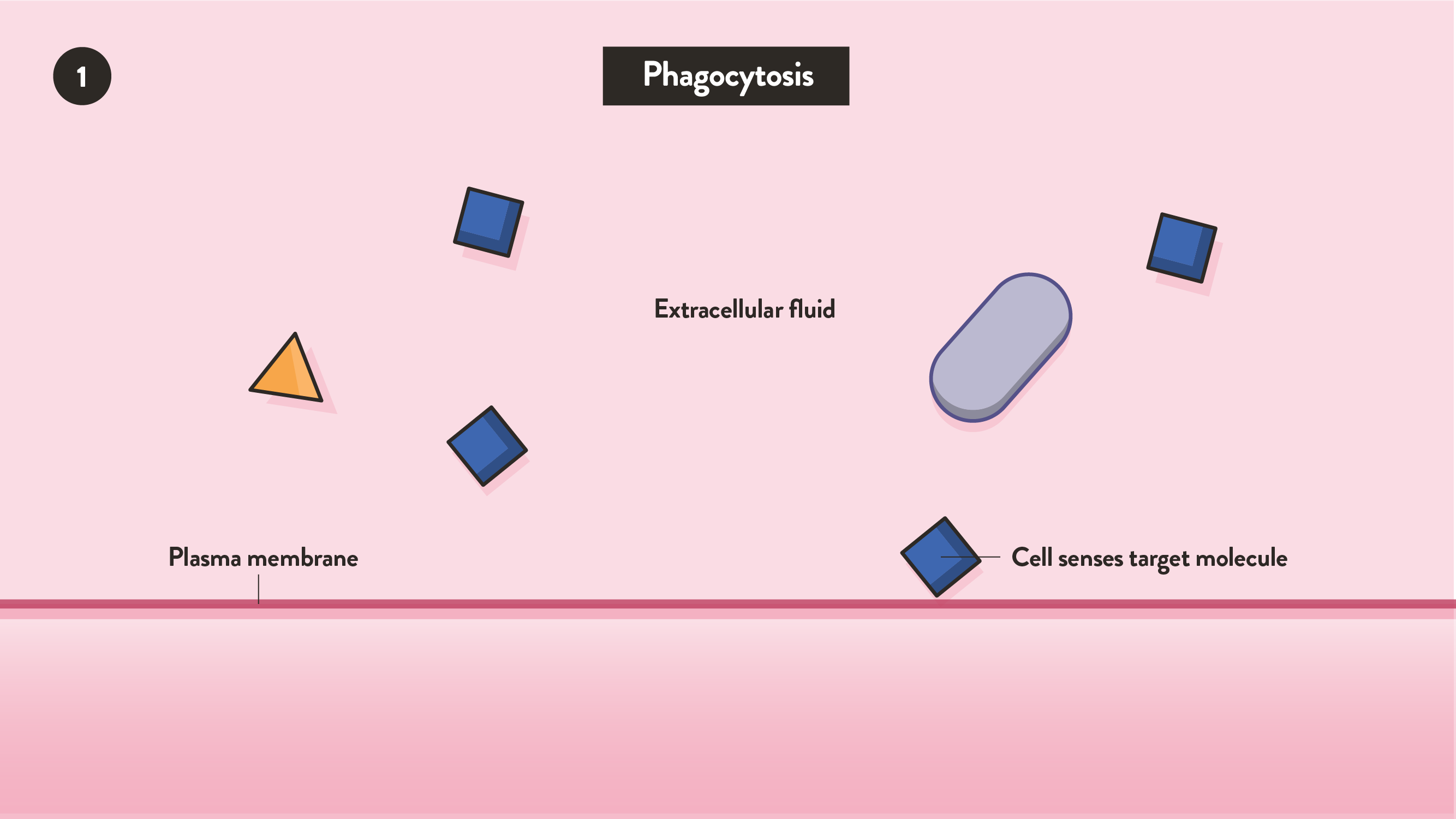
Image 1: Phagocytosis: The detection of target material
The detection of target material begins when a jail cell senses target textile on its surface (Image 1). Most cell types have a dedicated set of cell surface receptors that recognize various substances. For example, allowed cells tin can sense invasive microbes with receptors that recognize pathogen-associated markers. After the target material has been detected, the cell surface receptor initiates a serial of signals that prepare the jail cell for phagocytosis.
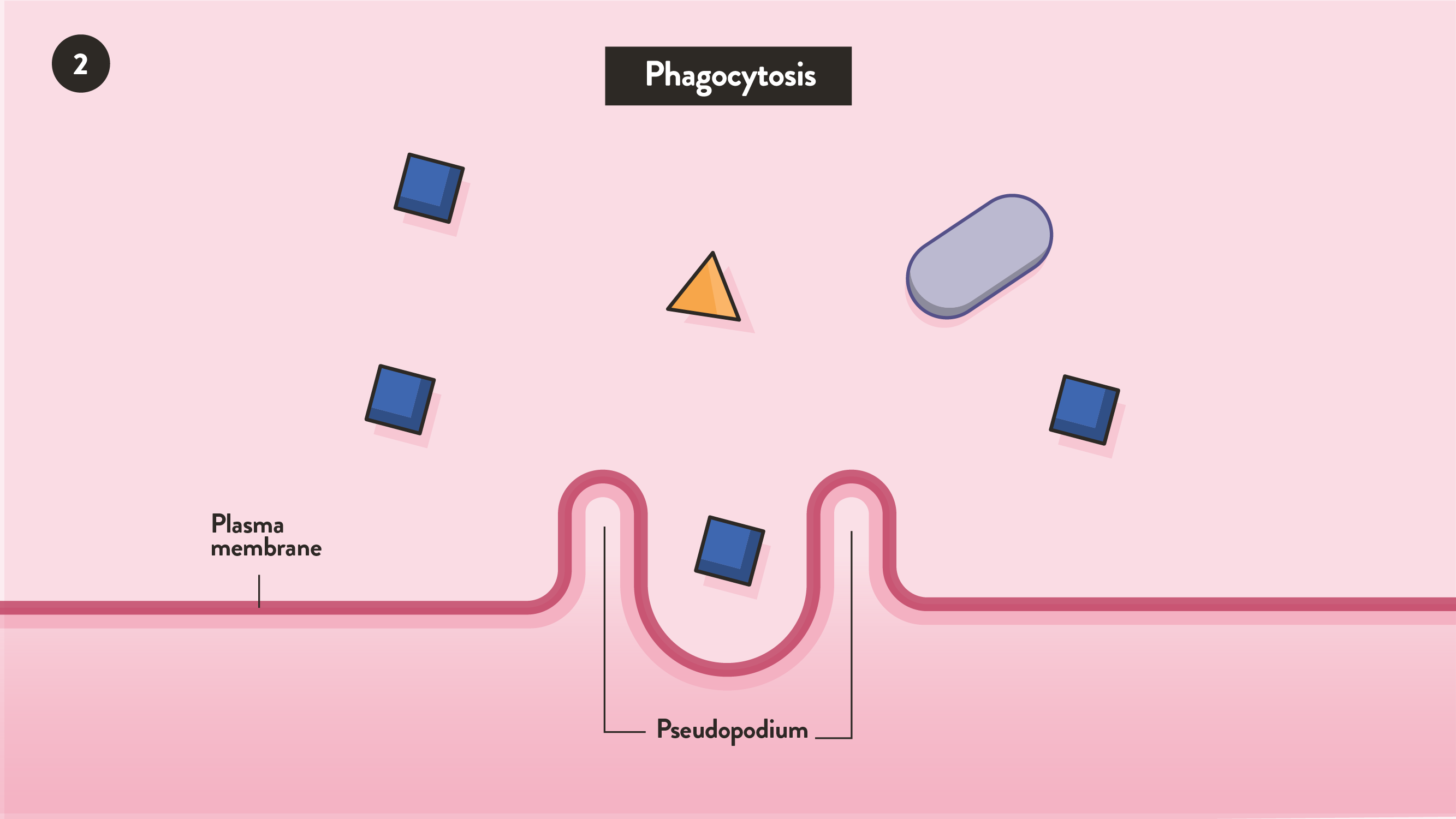
Image 2: Activation of phagocytosis
Activation of phagocytosis causes the cell membrane area in contact with the target material to rearrange into a cavity chosen the phagocytic cup (Image ii) . This procedure begins when the material-stimulated receptors send molecular signals that prepare the cell for target material intake.

Epitome 3: Phagosome germination
The germination of the phagosome is the third phase of phagocytosis that involves the complete internalization and closure of the phagocytic cup (Epitome 3). In one case the phagocytic cup fully covers and internalizes into a cellular compartment, the newly formed phagosome can begin its maturation process.

Image 4: Phagosome maturation. Here, the phagosome has merged with a lysosome, forming a phagolysosome.
Maturation of the phagosome is the final stage of phagocytosis (Image iv). Phagosome maturation consists of a series of cloth handoffs between the original phagosome and cellular compartments specialized in digestion. The early stages of phagosome maturation include a combination of fusion and fission events that prepare the cellular membrane of the maturing phagosome for material digestion. During the final stages of phagocytosis, the internal environs of the mature phagosome becomes more acidic and reactive, which aids the digestion of target material such as microorganisms.
What is pinocytosis?
While phagocytosis involves the ingestion of solid material, pinocytosis is the ingestion of surrounding fluid(due south). This type of endocytosis allows a cell to engulf dissolved substances that demark to the jail cell membrane prior to internalization. Different phagocytosis, pinocytosis is a "drinking" machinery wherein a prison cell actively engulfs external fluids over time. Even though pinocytosis differs from other forms of receptor-mediated endocytosis, these terms overlap with one another due to their similarities.
Pinocytosis function

Prototype five: Pinocytosis is initiated when the jail cell senses a soluble substrate.
In humans, pinocytosis primarily occurs when cells absorb nutritional or waste aerosol suspended in external fluid. The nutritional molecules that can activate pinocytosis include fats, sugars, proteins, ions or other small molecules. This process begins when a soluble substrate binds to the surface of a jail cell (prototype B1)

Image 6: A: External fluid is gathered into a membrane-bound pocket. B: The pocket begins to compression off.
Afterwards a substrate opportunistically binds to the jail cell membrane, the cell continues pinocytosis by gathering external fluid into a membrane-bound pocket called a pinosome (image 6A).

Image 7: The pinosome is internalized.
This pinosome continues to pinch off from the cell membrane (Image 6B) within the cell until information technology is fully internalized (Image 7).
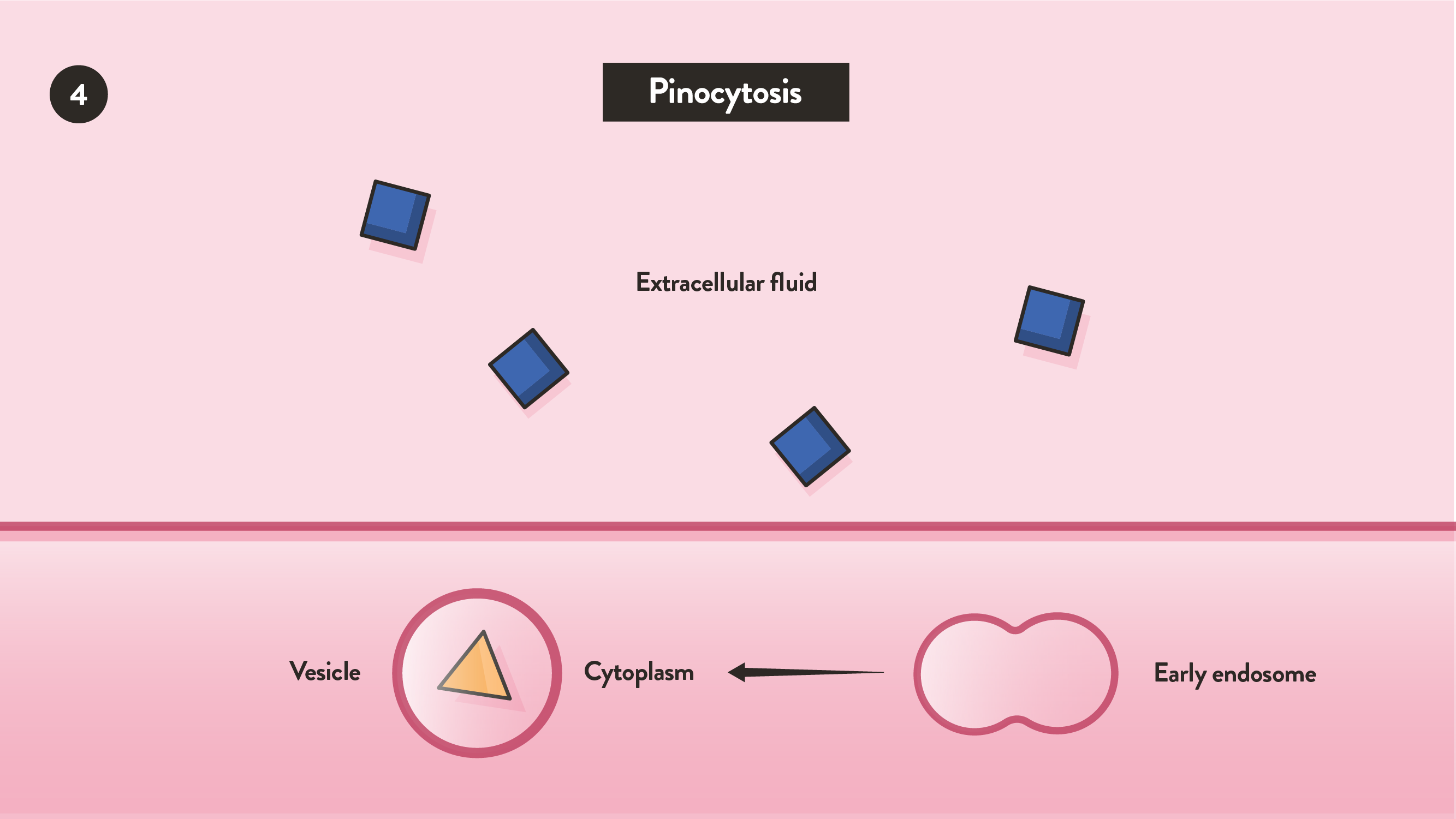
Image 8: The pinosome can now merge with other vacuole, such as the early on endosome, to enable breakdown of its contents.
Once the cell fully internalizes this cellular pocket, the newly formed compartment can swap its cloth with specialized vesicles that can break down substrate into smaller molecules (Prototype 8).
The size of these vesicles during the intake of fluid material tin plant whether a cell performs macropinocytosis vs micropinocytosis. Macropinocytosis is a grade of non-specific endocytosis that is common for all cell types. This process includes the intake of fundamental nutrients such as amino acids, carbohydrates and fats.
Micropinocytosis involves the ingestion of fluid material by small vesicles that are typically no larger than 0.1 micron. This process is typically initiated by cell surface lipid domain once they demark to their specific target molecules.one
Phagocytosis vs pinocytosis: nautical chart
| Phagocytosis | Pinocytosis | |
| Definition | Cellular intake of solid fabric | Cellular intake of fluid |
| Role | Immune response, nutrient uptake | Immune surveillance, nutrient uptake |
| Jail cell Types | Most commonly immune cells | About all cell types |
| Case | Macrophages | Skin cells |
Examples of phagocytes and phagocytic cells
Phagocytes are a specialized group of cells that perform phagocytosis efficiently. This grouping includes allowed cells such as macrophages , neutrophils and monocytes. Each blazon of phagocyte has a set of cell surface receptors that tin can initiate phagocytosis whenever they sense a target particle or pathogen.
Opsonization in phagocytosis
Opsonization is an immune process where phagocytes bind to foreign molecules that are linked to host-derived proteins such as antibodies. This process involves the binding of free-floating antibodies to strange materials so that these potential threats can be identified by the immune system. The tail of each antibody has a segment chosen the Fc region. This region specifically binds to Fc prison cell surface proteins found on the surface of phagocytic cells. Opsonization can also occur via the complement system, where a fragment of the system, C3b, acts equally a bounden site for phagocytes.
Opsonization is completed when a phagocyte identifies the foreign molecules of interest and initiates phagocytosis.
Want FREE admission to this Audio Article?
Complete the form below to unlock admission to this Audio Article: "Phagocytosis vs Pinocytosis: Definition and Function"
Technology Networks Ltd. needs the contact information you provide to u.s.a. to contact you about our products and services. You may unsubscribe from these communications at any fourth dimension. For information on how to unsubscribe, as well as our privacy practices and commitment to protecting your privacy, check out our Privacy Policy

Difference Between Pinocytosis And Phagocytosis,
Source: https://www.technologynetworks.com/immunology/articles/phagocytosis-vs-pinocytosis-definition-and-function-343544#:~:text=What%20is%20pinocytosis%3F,of%20surrounding%20fluid(s).
Posted by: pugliesesieneat.blogspot.com
0 Response to "Difference Between Pinocytosis And Phagocytosis"
Post a Comment